Autoimmune Inflammation: Why It Starts and Why It Doesn't Stop
Autoimmune inflammation is the same repair program that heals a cut, running without an off switch. What that means biologically, and what it does not mean.
Regen MDs Clinical Team//7 min read
The short version
Inflammation is not the problem. Inflammation that never switches off is. The acute response is a repair program with a built-in ending; in autoimmune disease that ending does not arrive.
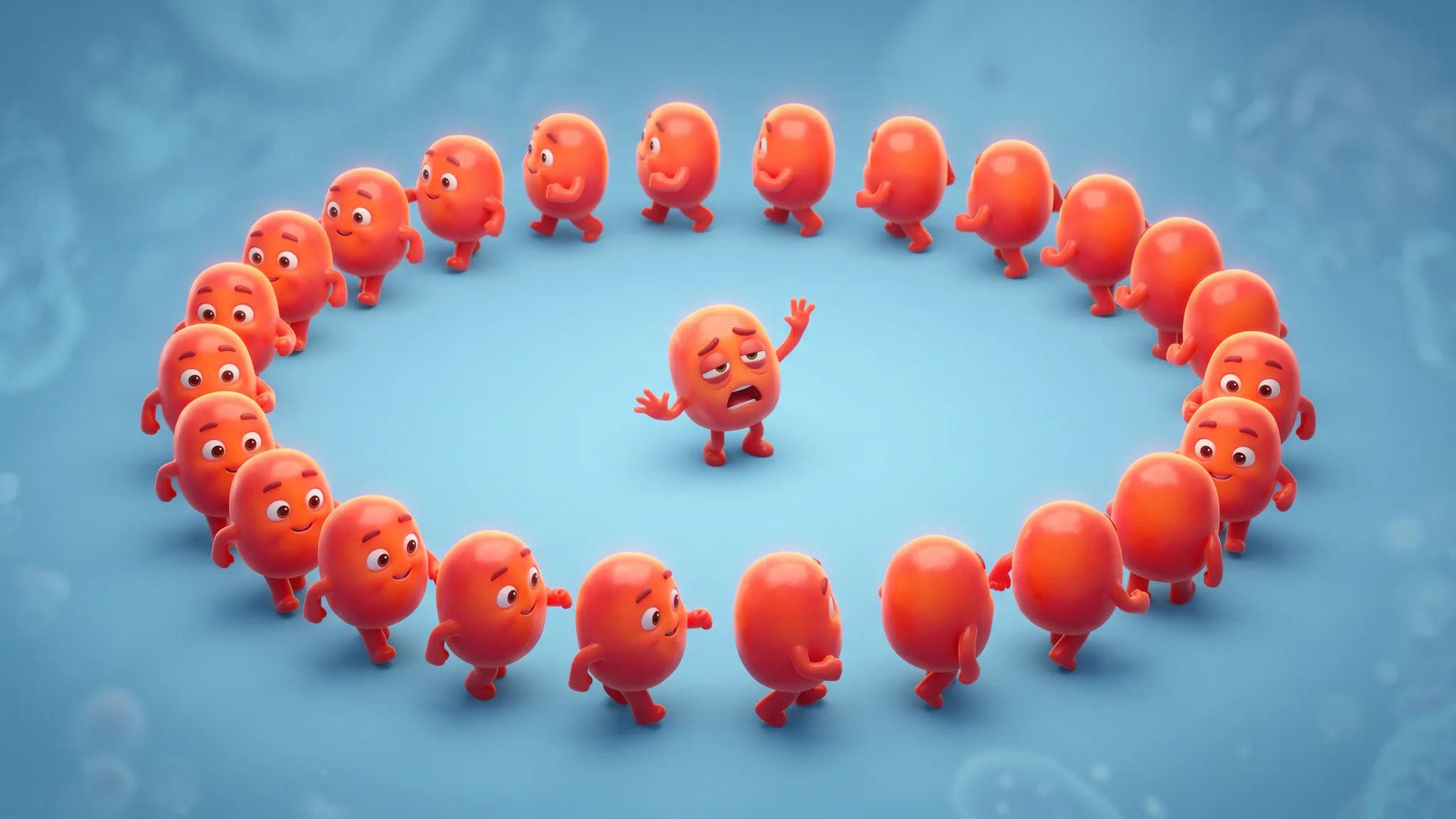
The distinction worth learning is between inflammation that resolves and inflammation that idles — the same machinery, running without a stop signal.
Regenerative signaling factors are described as supporting immune balance and barrier integrity — the biology they are understood to act on, not a claim that any autoimmune condition is treated, controlled or reversed.
Mechanism is far better established than outcome here. Anyone quoting you recovery figures for an autoimmune diagnosis has left the evidence behind.
Stay on what your specialist prescribed. Adjunctive care sits alongside immunosuppressants, biologics and DMARDs, never in place of them.
Every useful immune response is an inflammatory one. Cut a finger and within minutes the vessels around the wound widen, immune cells arrive, the skin turns red and warm and sore, and repair begins underneath the mess. A week later the finger is a finger again.
What happens at the end of that week is the part almost nobody thinks about. Resolution is not inflammation fading out through exhaustion. It is a separate, actively programmed phase with its own signalling molecules and its own instruction to stand down.
Autoimmune and chronic inflammatory disease is, largely, the story of that instruction never arriving. What follows is about the failure of an ending rather than of a beginning — what it looks like in tissue, and where adjunctive care sits next to the drugs a rheumatologist prescribes.
Inflammation is a repair program, not a malfunction
Acute inflammation is choreographed. Vessels dilate and become leaky so plasma and cells can reach the injury. Neutrophils arrive first and clear what is dead or foreign; macrophages follow, remove the neutrophils, and switch the local signalling toward rebuilding. Every one of those steps has an end condition written into it.
Which is why blanket suppression is a trade-off rather than a solution. Steroids and immunosuppressants are often the right answer for a condition damaging tissue now, but they are not a free one, and that is exactly why the prescribing specialist keeps hold of the dose.
Inflammation that resolves and inflammation that idles are not the same
Patients are often told they have "inflammation" as though it were one thing. Two very different patterns wear that word, and what separates them is not severity. It is whether the process has an ending.
Inflammation that resolves
Inflammation that idles
Trigger
Discrete — an injury, an infection, an irritant
Often unclear, or long since gone
Time course
Days to weeks, with a defined end
Months to years, with no end point
Immune cells
Recruited, then cleared away
Recruited, then retained
Effect on tissue
Damaged tissue is cleared and rebuilt
Healthy tissue is remodelled and gradually lost
What ends it
An active resolution phase
Nothing, until something interrupts the loop
How it feels
Sore, then better
Fatigue, stiffness, flares, fog
Two biological patterns described, not a self-assessment tool. Which one your symptoms belong to is a question for the clinician who can examine you and read your labs.
The right-hand column is what people mean when they say they feel unwell in a way that nothing seems to show. Idling inflammation is metabolically expensive and systemic, so it rarely stays where it started. Fatigue, poor sleep, low mood and cognitive fog track the inflammatory state more closely than they track any single joint or organ, which is one reason brain fog turns up across so many different diagnoses.
What "autoimmune" adds to the picture
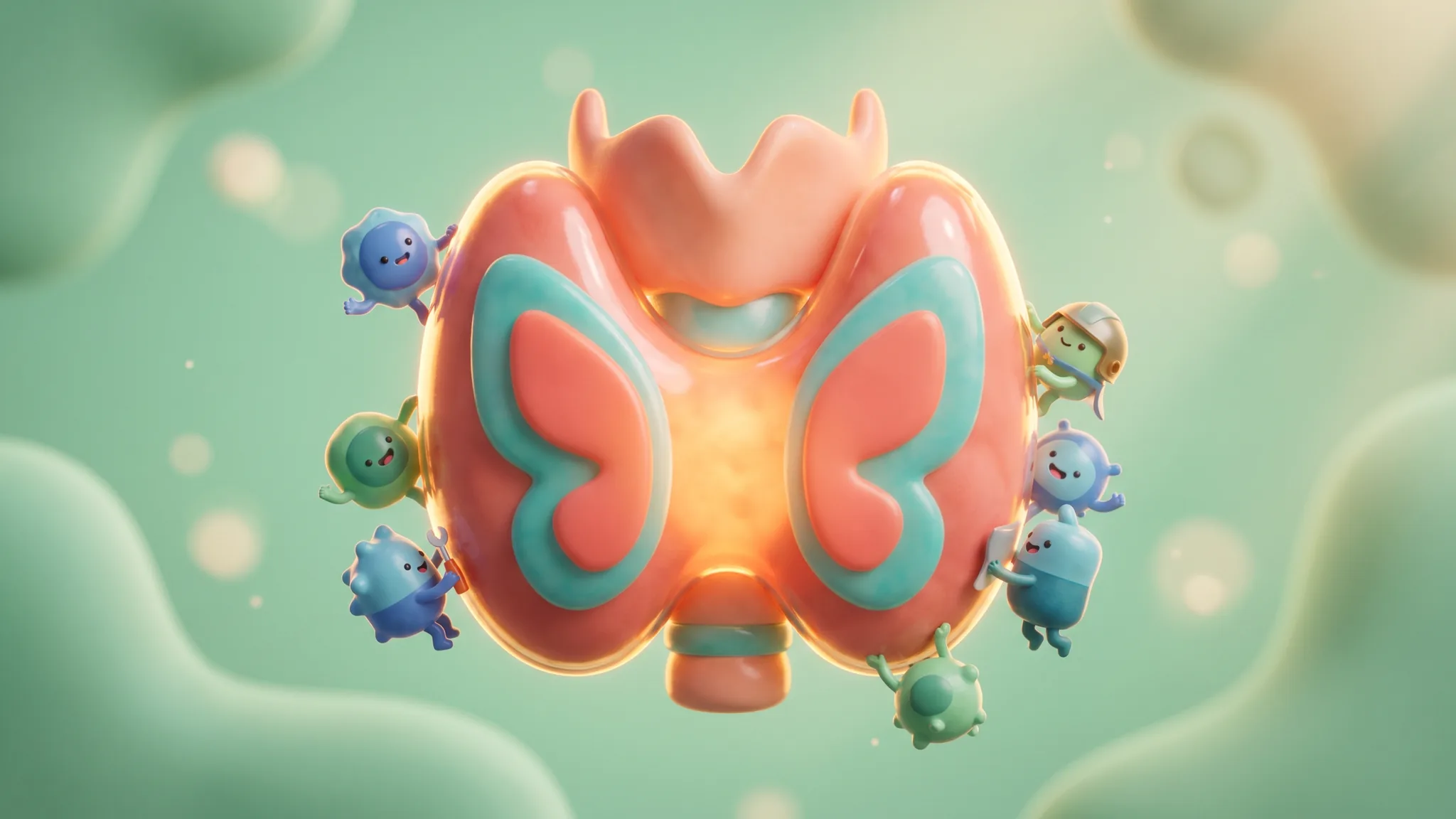
Autoimmunity is one specific reason for inflammation to persist: the immune system has stopped reliably distinguishing your own tissue from something that needs clearing. Rheumatoid arthritis, lupus, multiple sclerosis, inflammatory bowel disease and Hashimoto's thyroiditis differ in target and in course, and share that structural problem.
Tolerance is active, not passive. Ignoring self-tissue is something the immune system does on purpose, through regulatory cells and checkpoints. When that work lapses, self-tissue starts being read as foreign.
The target cannot be cleared. An infection can be eliminated, so the response can close. A joint lining, a myelin sheath or a thyroid gland cannot be, so the response has nothing to finish against.
Damage amplifies itself. Injured tissue releases its own alarm signals, which recruit more immune cells, which injure more tissue. The loop no longer needs the original trigger.
Genetics load the gun; environment usually pulls the trigger. Which is why the honest answer to "what caused this?" is a list rather than a culprit.
The two things signalling factors are described as supporting
Barrier tissue is the first. Gut lining, skin, airway and mucosa are not simply covers; they are actively maintained seals, and the junctions between their cells decide what gets across. A leaky barrier means a steady stream of material reaching an immune system that then has something to respond to. How much that contributes in any individual autoimmune condition is still under study.
The second is immune balance — how strongly inflammatory signalling runs relative to the signalling that closes it down. Ultra RSF (Regenerative Signaling Factors) is an acellular concentrate of more than 300 proteins and growth factors drawn from all six regions of the placenta, and those factors are described as supporting immune balance and barrier integrity. Be precise about what that sentence is. It describes the biology the material is understood to act on. It is not a claim that any autoimmune disease is treated, controlled, reversed or put into remission, and no reading of the current evidence would support one.
Two clarifications, because the market blurs both. Ultra RSF is not a stem-cell therapy — it is acellular, DNA-free and RNA-free, a difference set out in full in the comparison post. It is also physician-administered inside a directed plan rather than sold as a product, and its sourcing and processing are described on the treatment page.
Where molecular hydrogen is positioned
Oxidative stress and inflammation are close neighbours. Inflammatory cells generate reactive oxygen species as part of how they work, and the resulting oxidative pressure feeds back into inflammatory signalling. Molecular hydrogen is of interest because it is understood to act selectively, tempering the most aggressive oxidants such as the hydroxyl radical while largely leaving alone the milder reactive species the body uses for ordinary signalling.
H₂ is also the smallest molecule there is, so it crosses membranes without a transporter and reaches tissue by several routes. Lower oxidative pressure inside the cell is associated with steadier mitochondrial function. A starter course typically runs 20 to 40 minutes a session, two or three times a week, for four to six weeks; the practicalities are on the molecular hydrogen page. Reducing oxidative pressure is not the same as controlling an autoimmune disease, and should not be sold to you as though it were.
The honest state of the evidence
The gap in this field has a specific shape. Mechanism is comparatively well described: how resolution works, what barrier failure does, how redox pressure and inflammatory signalling feed each other. Outcome is not. The trials that would justify saying a regenerative protocol changes the course of rheumatoid arthritis or Hashimoto's have not been done.
That gap is where most of this industry's marketing lives. Percentages of improvement, potency multiples, claims of complete safety and named-disease treatment lists circulate freely with nothing behind them. A clinic willing to tell you what is unknown is giving you more information than one that will not.
Mechanism is a reason to investigate something. It is not a result, and should never be quoted to you as one.
Is autoimmune disease caused by inflammation?
It is more accurate to say autoimmune disease is expressed through inflammation. The underlying problem is a loss of immune tolerance to the body's own tissue, and inflammation is how that loss does its damage.
What is the difference between chronic inflammation and an autoimmune disease?
Chronic inflammation is a pattern with many possible causes, including ongoing infection, injury, metabolic disease and continued exposure to an irritant. Autoimmune disease is one specific cause of it, defined by the immune system targeting the body's own tissue and usually confirmed by antibody testing and a specialist's assessment.
Can regenerative therapy replace my biologic or DMARD?
No. Nothing offered at Regen MDs replaces disease-modifying therapy, and no prescribed medication should be stopped or reduced without your specialist's direction. Regenerative protocols are adjunctive to guideline-based care.
What does immune balance actually mean?
It describes the signalling environment — how strongly inflammatory signals run relative to the signals that bring a response to a close. That is biology under study, not a measurable clinical outcome or a claim of disease control.
Does Regen MDs diagnose autoimmune conditions?
No. Diagnosis and disease monitoring stay with your treating specialist. Our physicians review your history, medications and existing labs, and share EMR-ready notes back to the clinicians managing your condition.
This article is general health information, not medical advice, and does not create a physician–patient relationship. It describes mechanisms reported in the literature rather than guaranteed outcomes; individual response varies. Regen MDs provides you an alternative to your current care, and is complementary to your guideline-based medical care. Ultra RSF (Regenerative Signaling Factors) is not a stem-cell therapy. It is an acellular, non-biologic protein preparation — no cells, no DNA and no RNA. Talk to a licensed clinician before starting, stopping, or changing any treatment.