
Patient Guide6 min read
In-Home Regenerative Medicine: How Care at Home Actually Works
The consultation happens on a screen, the equipment arrives in a box, and the follow-up is remote. What that model covers, and what it does not.
Shoulder and neck pain regenerative treatment: what an evaluation assesses, in-home versus in-clinic delivery, and how it sits beside physical therapy.

Ask people where the neck ends and the shoulder begins and you will get the line drawn in a different place every time. The anatomy is sympathetic to the confusion. Trapezius runs from the base of the skull to the mid-back and out to the shoulder blade, the rotator cuff sits beneath a joint fed by nerve roots that leave the cervical spine, and the small facet joints of the neck refer pain into territory nobody would think to blame.
Which is why the most common frustration in this region is treating the place that hurts and finding it does not help. The sore spot is often the destination of the problem rather than its origin, and a plan built entirely around that spot is aiming at the wrong address.
It is worth separating the tissues involved, because they behave differently and they fail differently.
Tendon is not simply strong rope. It is a highly organized collagen structure that depends on its arrangement for its mechanical properties, and it has a modest blood supply, which is the reason tendon problems are famously slow. Under sustained inflammatory pressure the matrix gets laid down disorganized, and disorganized tissue is both weaker under load and more inclined to keep signalling that something is wrong.
Muscle in this region has its own contribution. Sustained low-grade guarding around a painful joint changes how the whole shoulder girdle moves, and altered movement loads tissue in ways it was not built for. The pattern becomes self-maintaining well after whatever started it has resolved.
The glenohumeral joint is a synovial compartment with the same environment problem seen elsewhere: oxidative pressure high, inflammatory signalling that idles instead of resolving, and microcirculation working harder for less delivered. The cervical facet joints are smaller versions of the same arrangement, sitting immediately next to nerve roots that have very little room to spare. Compression or irritation there produces symptoms in an arm that has nothing wrong with it.
Patients often expect an evaluation to be a search for the treatment they will be given. In practice most of it is a sorting exercise, and a fair share of it is looking for reasons to say no.
Only after that does route selection become a sensible conversation. Ultra RSF (Regenerative Signaling Factors) can be delivered intravenously, into a specific joint, subcutaneously, or into the nasal mucosa, and the distribution of the problem decides which of those is reasonable. A single symptomatic shoulder joint and a diffuse neck-and-shoulder picture are not the same question; our guide to administration routes works through how each one is chosen.
This is the question most people actually want answered, and the honest response is that the medicine does not change. The evaluation, the plan, the review and the notes are identical. What differs is where the sessions happen and what that asks of you.
| In your home | In our Orlando offices | |
|---|---|---|
| Consultation | Free 30-minute call with a medical provider, in any U.S. state | The same conversation, in person at either office |
| Physician evaluation | Online, with your records and any imaging reviewed beforehand | In person, with examination |
| H₂ inhalation | Medical-grade equipment sent to you; sessions of 20–40 minutes, two or three times a week | Sessions run in clinic, with higher-output equipment available |
| Ultra RSF administration | Physician-directed, as part of the plan | In office |
| Follow-up | Online review, with the plan adjusted against what is happening | In person or online, whichever suits |
| The practical catch | You have to actually run the sessions | You have to be in Orlando, within Mon–Fri 9AM–6PM or Sat 9AM–1PM EST |
For a shoulder in particular, the in-home option has one genuine advantage worth naming: consistency. A protocol that depends on two or three sessions a week for a month or more is easier to sustain in a living room than in a car park. How that arrangement works in practice is covered in our explainer on in-home care.
Tissue responds to load. That is not a philosophical position, it is how tendon and muscle organize themselves, and it means graded loading under someone who knows what they are doing is not an optional extra alongside a regenerative plan. It is the part that teaches remodeling tissue what shape to take.
So the coordination matters more here than in most regions. Notes are prepared for your own physicians and therapists, so that nobody is adjusting a program blind to what someone else has decided. If your therapist has you on a progression, stay on it. If your physician has you on a medication, stay on that too, and raise any proposed addition with them rather than with us alone.
Our physicians and how they work is set out on the about page, and the composition and processing of what is used is on the treatment page. Both are worth reading before agreeing to anything, here or anywhere else.
Within that boundary, what an adjunctive plan is reasonably described as doing is working on the tissue environment while your existing care does what it does. That is a modest claim. It is also the only one that can be made honestly, and a clinic making a larger one is worth walking away from.
The shoulder and the neck share nerve supply and overlapping muscle attachments, so pain from cervical structures is routinely felt in the shoulder and upper arm. This is why an evaluation looks at both regions rather than only at the painful one.
No. A structural tear is a structural problem and is assessed by an orthopedic specialist, not resolved by an adjunctive protocol. If surgery has been recommended to you, that recommendation stands.
The clinical content is the same in both settings, including the evaluation, the plan and the follow-up. The difference is logistical, and for a course running several sessions a week over a month or more, consistency often favors treating at home.
No. Graded loading is how tendon and muscle organize themselves, and it does work that no injection or inhalation session replaces. Continue with your therapist and let both sides know what the other is doing.
No. Consultations are free and run online in every U.S. state, and in-home treatment is available in all of them. In-clinic care is offered at our two Orlando-area offices for anyone who prefers it or is local.
This article is general health information, not medical advice, and does not create a physician–patient relationship. It describes mechanisms reported in the literature rather than guaranteed outcomes; individual response varies. Regen MDs provides you an alternative to your current care, and is complementary to your guideline-based medical care. Ultra RSF (Regenerative Signaling Factors) is not a stem-cell therapy. It is an acellular, non-biologic protein preparation — no cells, no DNA and no RNA. Talk to a licensed clinician before starting, stopping, or changing any treatment.
The consultation happens on a screen, the equipment arrives in a box, and the follow-up is remote. What that model covers, and what it does not.
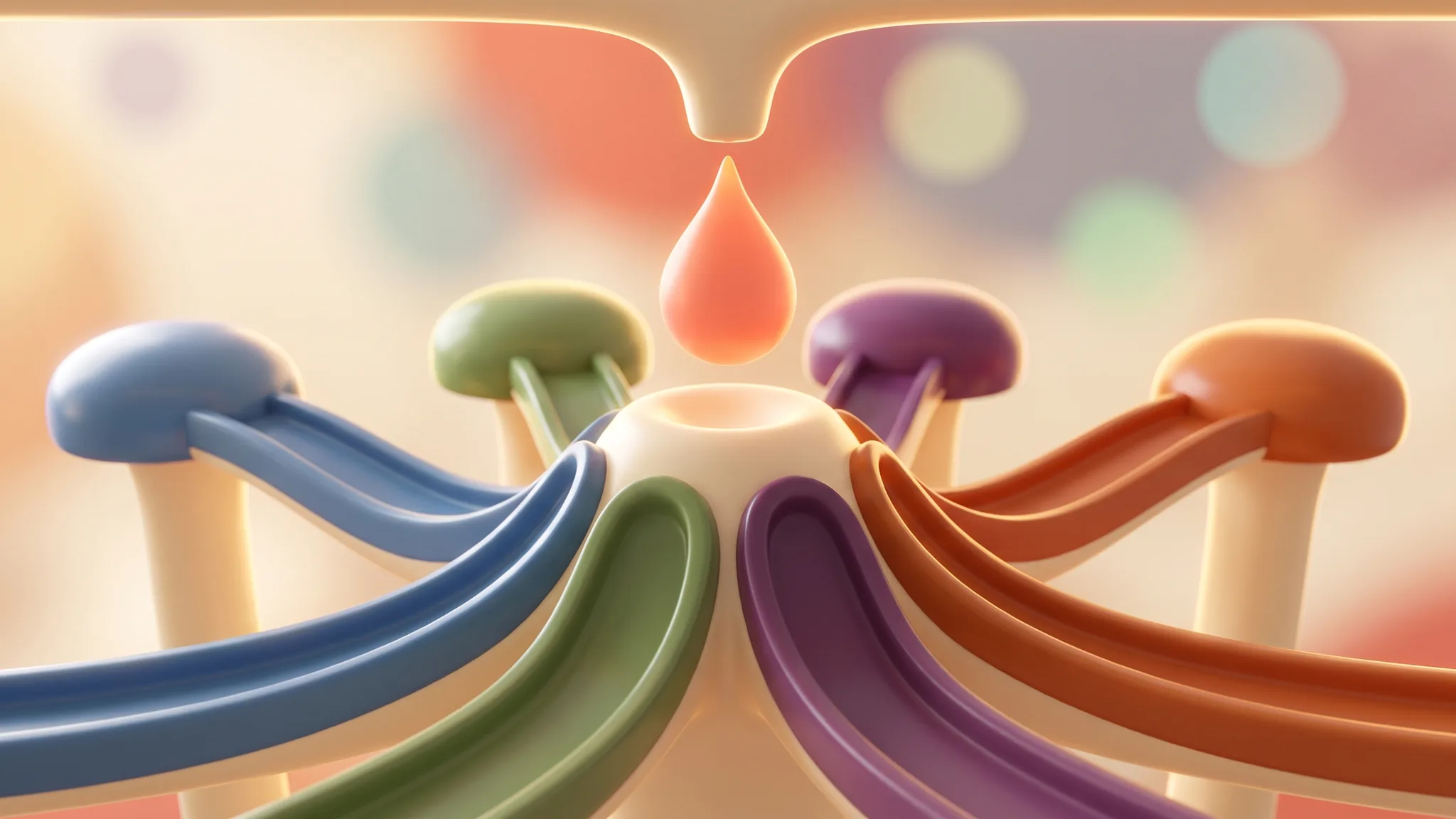
Route is not an administrative detail. It decides where a signalling preparation arrives first, and it is chosen from an evaluation rather than from a menu.
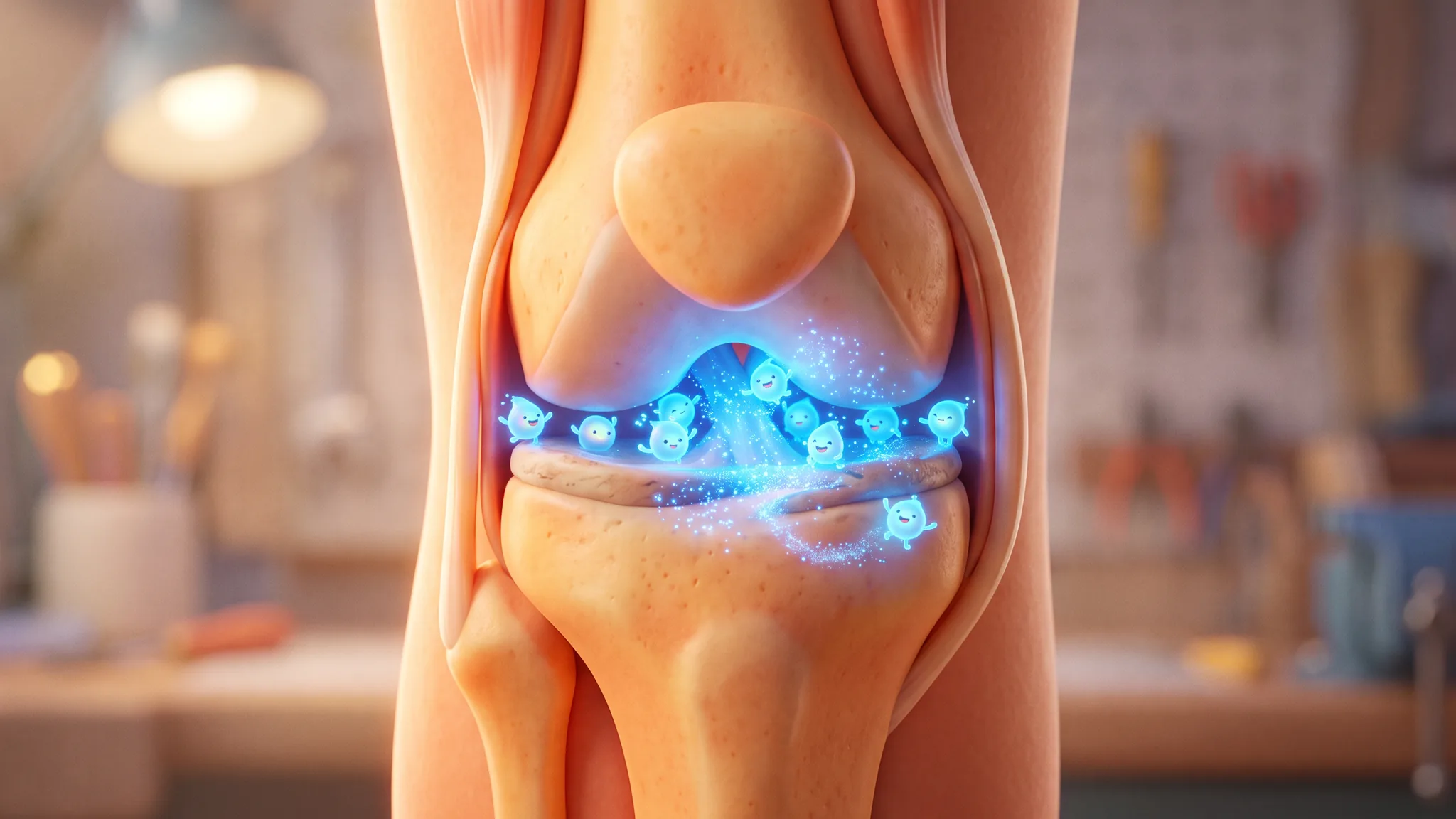
A knee that hurts every day is usually two problems wearing one name. Here is the biological half, the route physicians use to reach it, and the boundary around what any of it can achieve.
Thirty minutes with one of our physicians — no cost, no obligation — to review your history and set out the options honestly.